
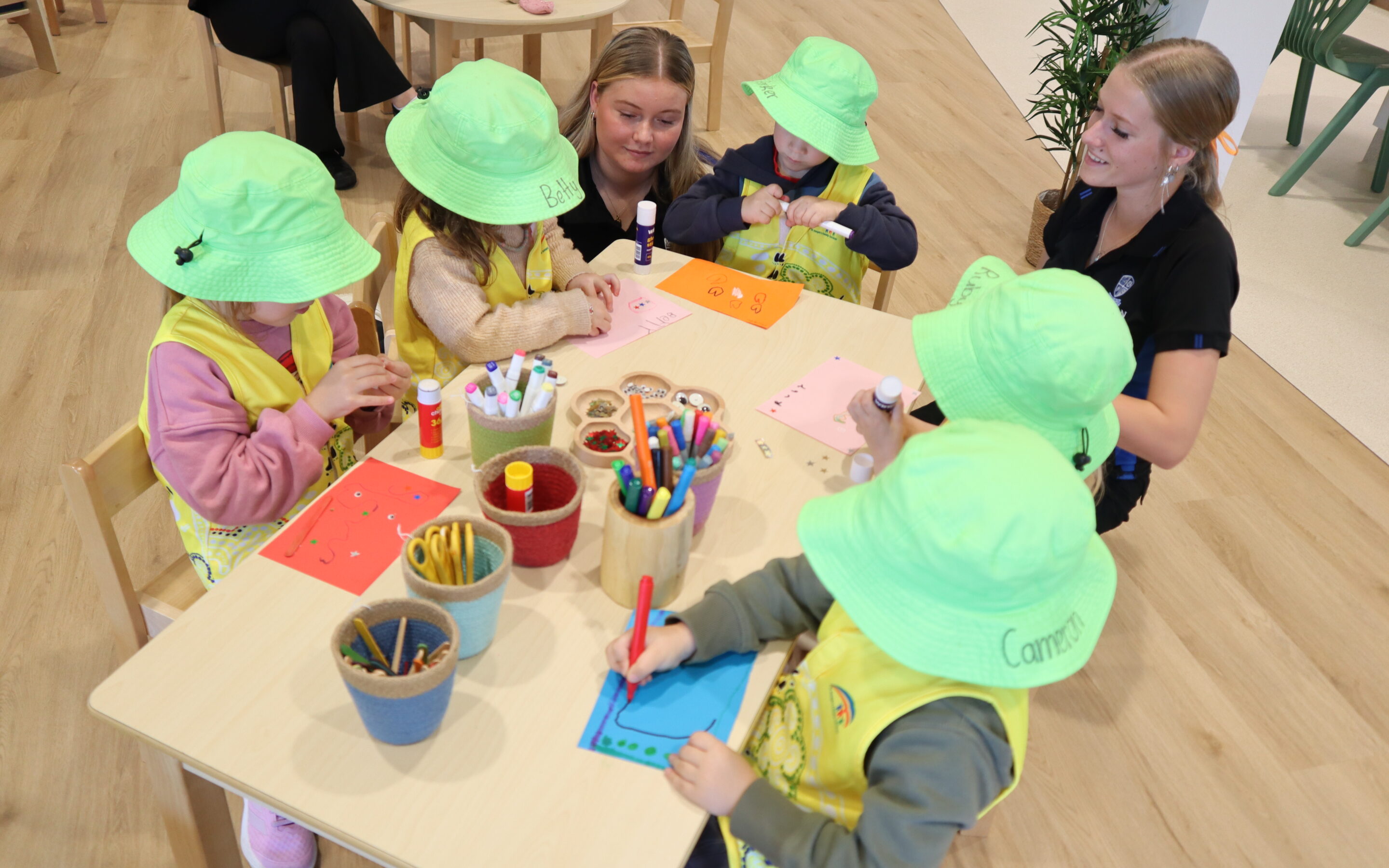
The Early Childhood Education and Care (ECEC) classes have been exceptionally busy recently, filled with the laughter and energy of some very special little visitors.
This term, students welcomed educators and children from St Joseph’s Family Services into their simulated learning environment. Over several weeks, the classroom was transformed into a vibrant hub of activity of intentional teaching and collaborative play as students took the reins to plan, prepare, and host engaging Play and Learning sessions.
These visits offer a unique, hands-on opportunity for students to step outside the textbook and showcase the practical skills they have been refining both in class and during their external workplace learning experiences. From designing inclusive spaces to facilitating small- and large-group activities, the students consistently demonstrated professionalism, creativity, and a deep understanding of early childhood development.
While the sessions looked like pure fun to the children, every experience was intentionally designed to reflect industry standards. Students, assessing their learning and design, embedded the planning cycle to observe the visiting children and build age-appropriate environments that foster meaningful, purposeful play aligned with the Early Years Learning Framework (EYLF v2.0) outcomes.
Michelle Smith, Early Childhood Education and Care Teacher, noted that the sessions clearly highlighted how thoroughly the students had mastered the profession’s complex framework.
“Our students have demonstrated an understanding of how to translate theory into practice. They have embedded Education and Care Services and the National Quality Standards directly into their pedagogy. By using the planning cycle, they’re not just setting up activities but actively observing children’s learning and development, resulting in meaningful outcomes,” Smith said.
Hosting the children onsite serves as the perfect bridge between classroom theory and real-world work placements. It allows students to test ideas, adapt in real-time, and see the immediate impact of their teaching strategies.
Ultimately, the term’s visits were a true celebration of student progress, highlighting the immense dedication, care, professionalism and enthusiasm that these future educators bring to their studies every single day.
“By applying the planning cycle, students have developed the skills to observe children effectively and create child-focused, age-appropriate learning environments that support meaningful play and learning experiences,” Smith added.